The CRO's problem is not risk identification. It is risk evidence.
Control effectiveness from attestation
Attestation is a statement of intent, not evidence of operation. When a regulator asks for proof that a control operated on a specific transaction, attestation is not an answer. It is an admission.
Risk scoring from static assessments
Questionnaire-based, subjective, decaying from the moment they are set. A risk score from 12 months ago is not a risk score. It is a historical artefact presented as current intelligence.
Emerging risks invisible
Patterns are invisible until they materialise as incidents. By the time a correlated vendor failure or jurisdictional drift becomes visible, it has already become an exposure.
Three lines dependent on manual reporting
Gaps between lines filled with assumption, not evidence. The three lines model works when evidence flows between them. Without infrastructure, what flows is opinion.
Board risk report assembled
Data from multiple systems, reconciled, interpreted, formatted. A board risk report that takes weeks to assemble is a board risk report that describes a position the enterprise no longer occupies.
Your dashboard & heatmaps
Risk scored from
what actually happens
Risk concentration heatmaps across counterparties, jurisdictions, vendor types and policy domains.
Risk that reflects reality, not a snapshot from six months ago.
Explore Dashboard & Cockpit →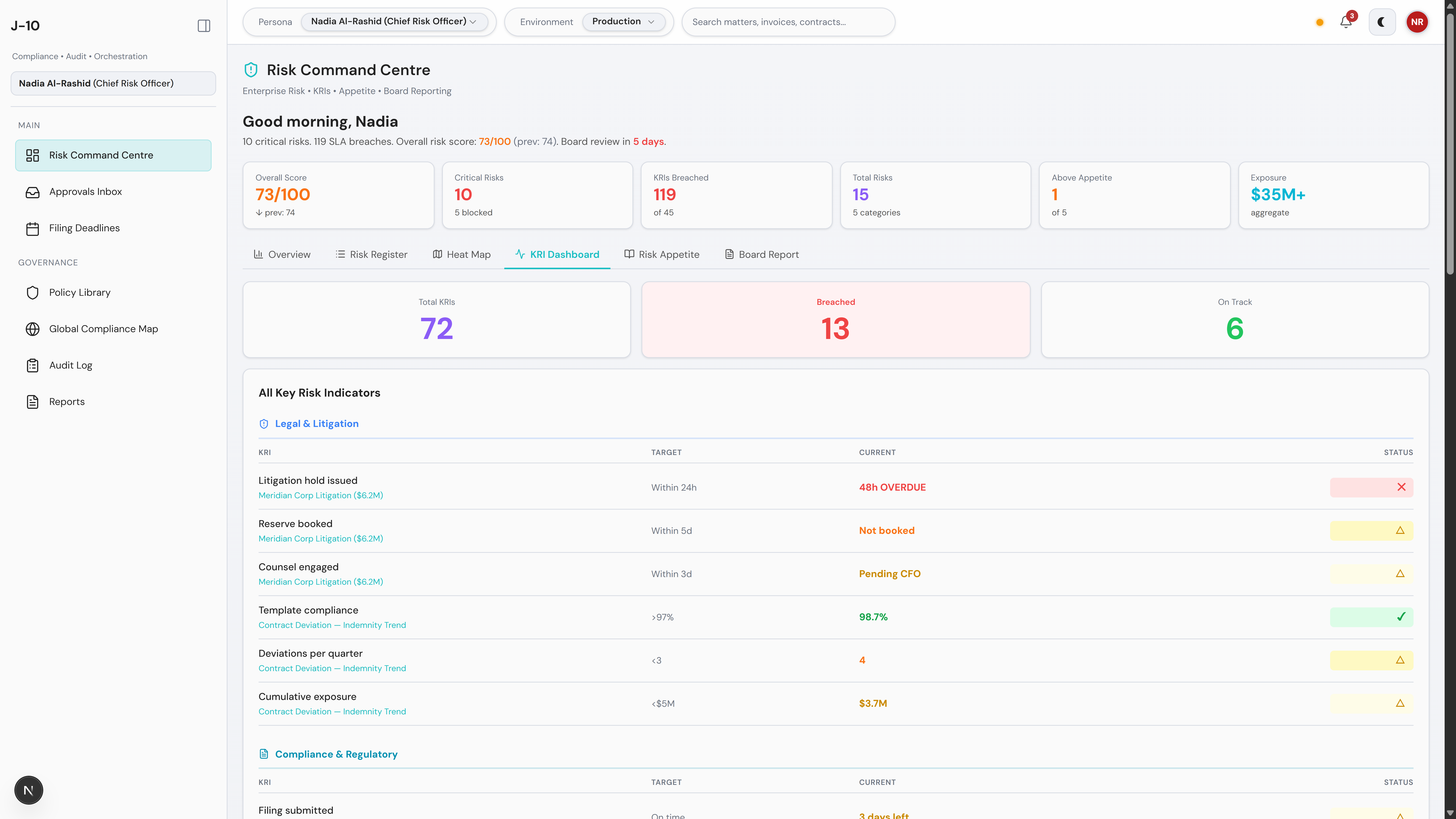
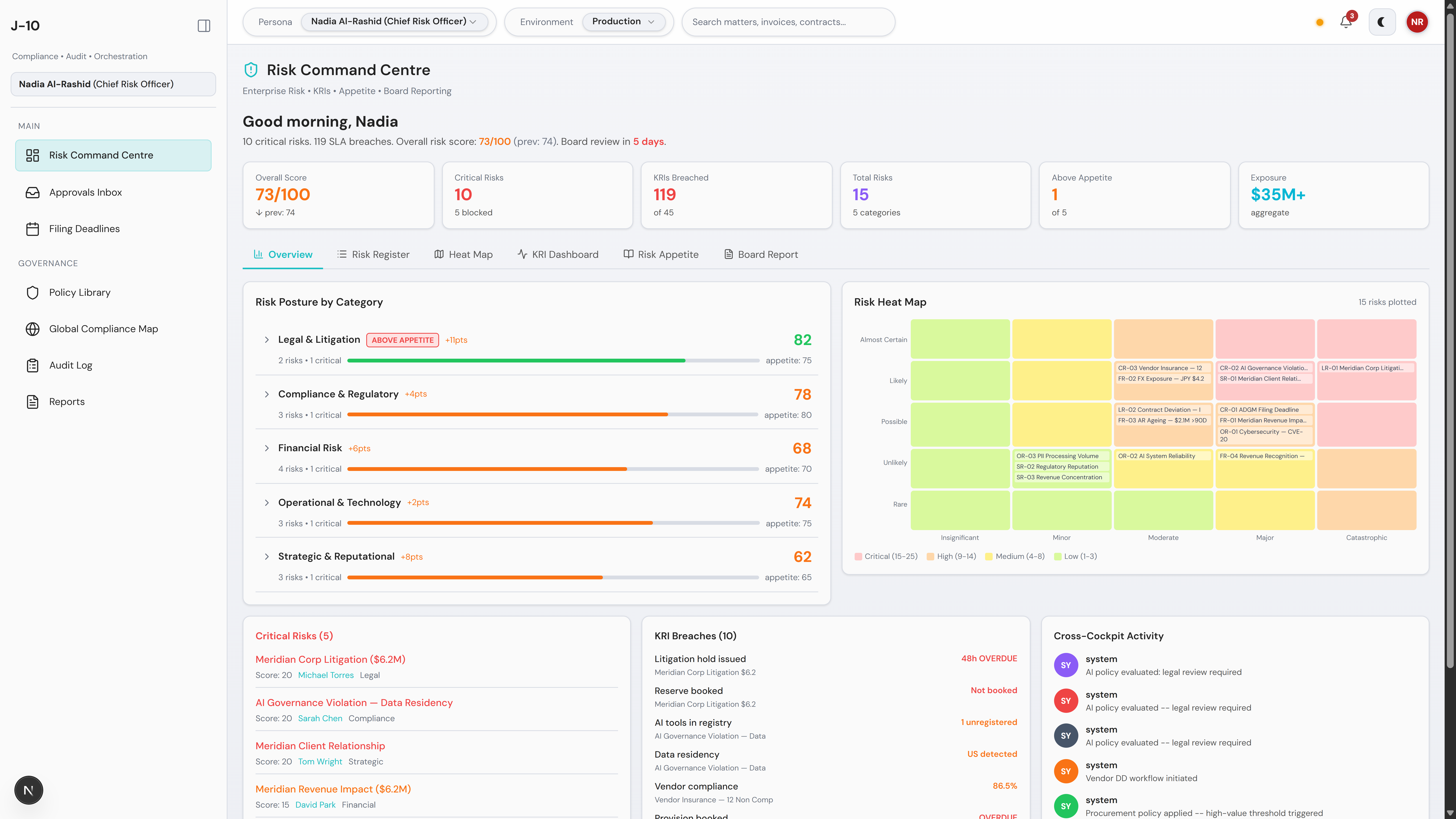
Your cockpit
Drill into control evidence.
Trace patterns.
Evidence of control operation on every governed transaction. Drill into emerging risk patterns.
Control evidence
Evidence from operations,
not from attestation
Proof that each control enforced on a specific transaction, with a specific rule version. 100% coverage.
Control effectiveness scored from real operational outcomes.
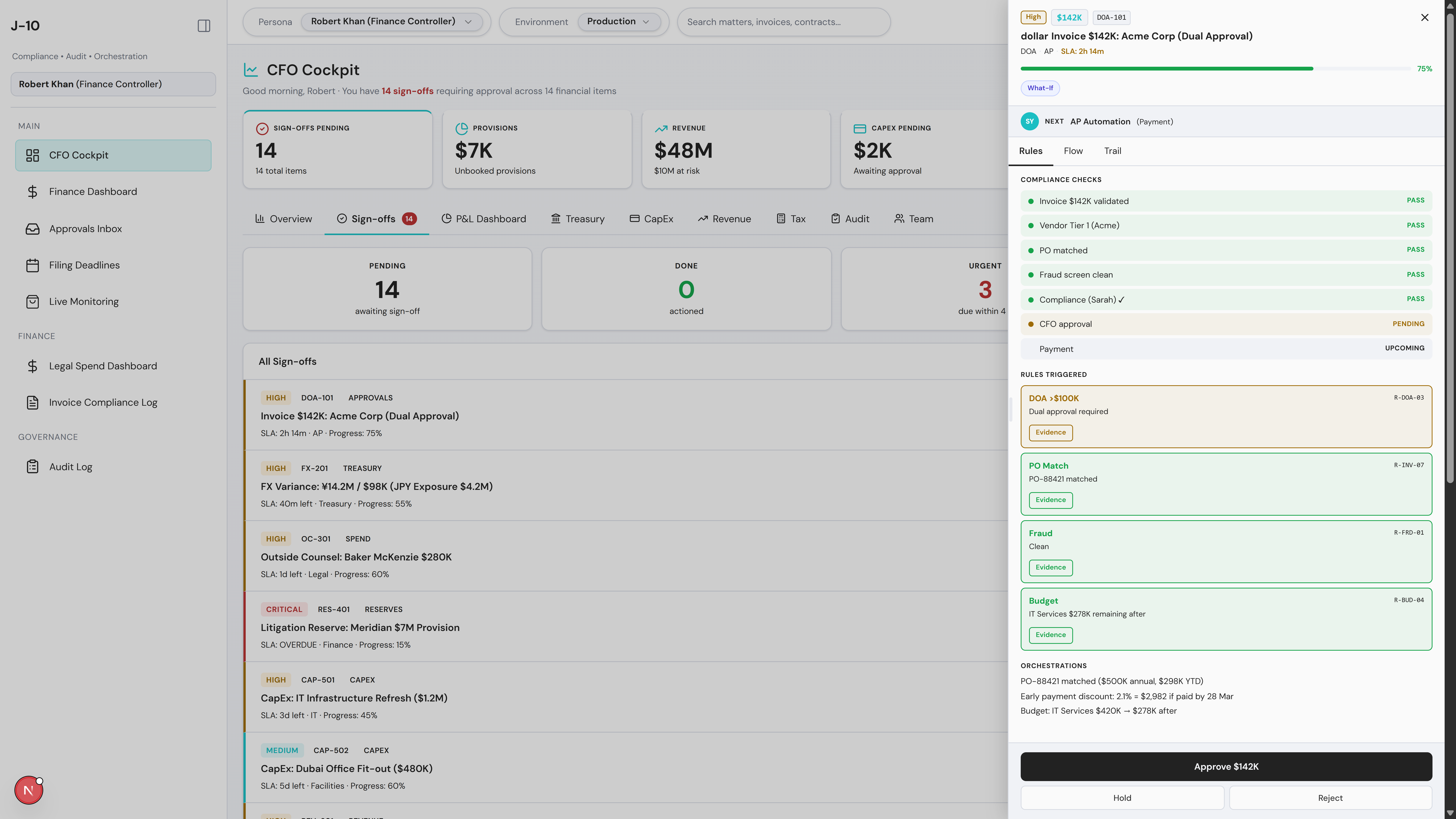
Dynamic risk scoring
Risk scored from
what actually happens
Risk models recalibrate continuously. Counterparty risk updates with every obligation performance.
Cognitive Engine identifies emerging patterns before they materialise.
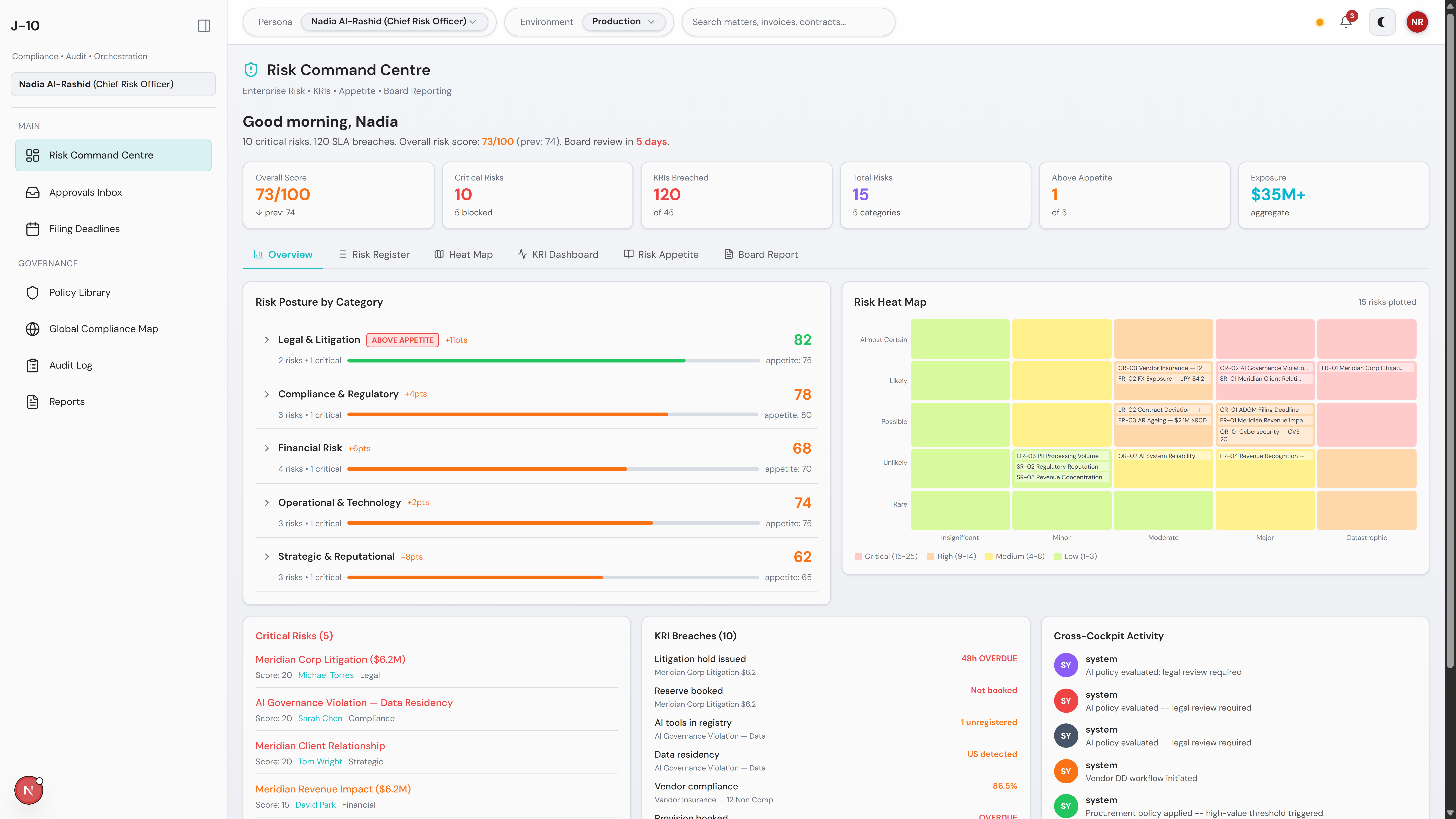
The transformation
Before and after J-10
Control effectiveness from attestation
Evidence on every transaction
Static annual assessments
Dynamic scoring from real data
Emerging risks invisible
Patterns detected before incidents
Three lines: manual reporting
Evidence generated automatically
Board report assembled
Generated from live data, always current
“The CRO who can show evidence of control operation on every transaction changes the risk conversation permanently.”